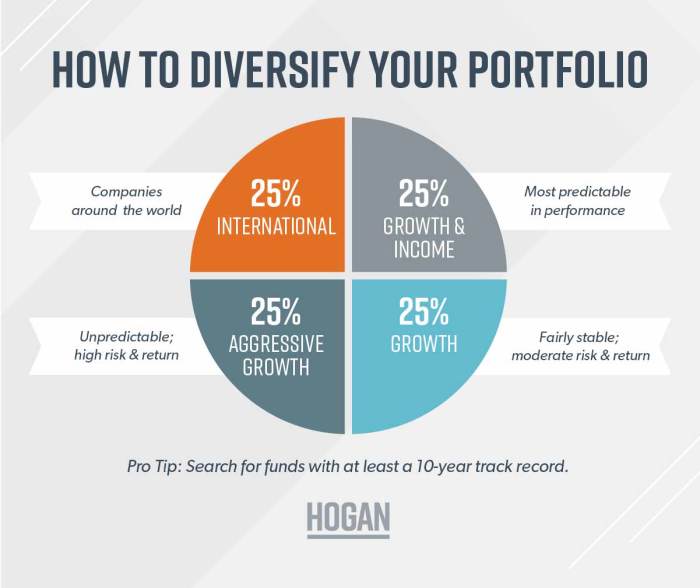
Embark on a journey with the best investment advisors for diversified portfolios, offering expert insights and strategies for financial success.
Learn how to make the most out of your investments with tailored advice and proven techniques in portfolio diversification.
Investment Advisors for Diversified Portfolios
Investment advisors play a crucial role in managing diversified portfolios for their clients. They provide valuable expertise and guidance in selecting a mix of investments across various asset classes to minimize risk and optimize returns.Diversification is essential in investment portfolios as it helps spread risk across different investments, reducing the impact of a decline in any single asset. By investing in a variety of assets such as stocks, bonds, real estate, and commodities, investors can potentially enhance their overall portfolio performance and smooth out volatility.
Comparison of Top Investment Advisory Firms
- Vanguard Group: Vanguard is known for its low-cost index funds and ETFs that offer diversified exposure to various asset classes. They focus on long-term investment strategies and have a strong track record of delivering consistent returns.
- Fidelity Investments: Fidelity offers a wide range of investment products and services, including actively managed mutual funds and personalized advisory services. They provide comprehensive research and analysis to help clients build diversified portfolios tailored to their financial goals.
- Charles Schwab: Charles Schwab is a full-service investment firm that provides a range of investment options, from robo-advisors to personalized financial planning services. They emphasize low fees and offer a variety of tools to help investors diversify their portfolios effectively.
Investment Advice

When seeking investment advice from advisors for diversified portfolios, individuals can expect a range of services and recommendations tailored to their financial goals and risk tolerance. These may include:
Types of Investment Advice
- Asset Allocation Strategies: Advisors may suggest diversifying investments across various asset classes such as stocks, bonds, real estate, and commodities to reduce risk.
- Portfolio Rebalancing: Regular adjustments to maintain the desired asset allocation and risk level in line with changing market conditions.
- Investment Selection: Recommending specific securities, mutual funds, or exchange-traded funds (ETFs) based on individual goals and preferences.
- Retirement Planning: Providing guidance on saving for retirement through investment vehicles like IRAs, 401(k)s, and annuities.
- Tax-Efficient Investing: Strategies to minimize tax liabilities by utilizing tax-advantaged accounts and investment vehicles.
Examples of Successful Investment Advice
- One successful investment advice scenario involved a client diversifying their portfolio by adding international stocks, which helped mitigate the impact of a domestic market downturn.
- Another example is an advisor recommending a mix of growth and value stocks to balance risk and return in a client’s portfolio, resulting in steady long-term growth.
Benefits of Investment Advice
- Long-Term Financial Goals: Investment advice plays a crucial role in helping individuals achieve their long-term financial objectives, whether it’s saving for retirement, funding education expenses, or building wealth over time.
- Risk Management: Advisors can help clients navigate market volatility and reduce risk by diversifying portfolios and implementing sound investment strategies.
- Financial Education: Through personalized advice, individuals can gain a better understanding of investment options, market trends, and the importance of disciplined saving and investing.
Investment Advisor Selection Criteria
When it comes to selecting an investment advisor for diversified portfolios, there are several key factors to consider to ensure you make the right choice. Credentials, experience, and a solid track record are crucial aspects to evaluate when choosing an advisor to manage your investments. Here is a step-by-step guide on how to evaluate and select the best investment advisor for your diversified portfolio:
Key Factors to Consider
- Qualifications and Credentials: Look for advisors who hold relevant certifications such as CFA, CFP, or ChFC, as this demonstrates their expertise and commitment to professional standards.
- Experience: Consider the advisor’s years of experience in the industry and their track record of successfully managing diversified portfolios.
- Fee Structure: Understand how the advisor is compensated, whether through fees, commissions, or a combination of both, and ensure it aligns with your investment goals.
- Investment Philosophy: Make sure the advisor’s investment approach aligns with your risk tolerance, time horizon, and financial objectives.
Significance of Credentials and Experience
Having the right credentials and relevant experience is crucial when selecting an investment advisor for diversified portfolios. Credentials such as the CFA (Chartered Financial Analyst) designation or CFP (Certified Financial Planner) certification indicate that the advisor has undergone rigorous training and met professional standards. Experience, on the other hand, provides a track record of success and the ability to navigate various market conditions.
Step-by-Step Guide to Selecting the Best Investment Advisor
- Define Your Investment Goals: Determine your financial objectives, risk tolerance, and investment timeline.
- Research Potential Advisors: Look for advisors with the right qualifications, experience, and a solid reputation in the industry.
- Interview Potential Advisors: Schedule meetings with shortlisted advisors to discuss your goals, investment philosophy, and fee structure.
- Check References: Reach out to current or past clients of the advisor to get feedback on their experience and performance.
- Review the Advisor’s Form ADV: This document provides important information about the advisor’s background, services offered, and potential conflicts of interest.
- Make Your Decision: After thorough evaluation, select the investment advisor who best aligns with your financial goals and preferences.
Investment Banking and Diversified Portfolios
Investment banking services play a crucial role in the management of diversified portfolios. These services can provide valuable resources, expertise, and opportunities that can enhance the performance and growth of a diversified investment strategy.
Complementary Offerings of Investment Banking
- Underwriting Services: Investment bankers can assist in raising capital through underwriting services, which can be beneficial for diversifying investment portfolios.
- Mergers and Acquisitions (M&A): Investment bankers can help in identifying potential M&A opportunities that align with the diversification goals of a portfolio.
- Financial Advisory: Investment bankers can offer financial advice on strategic decisions that can impact the diversification of a portfolio.
Successful Collaboration Examples
- Joint Investment Strategies: Investment bankers and advisors can work together to create customized investment strategies that maximize diversification while considering market trends and opportunities.
- Portfolio Rebalancing: Investment bankers can assist in the timely rebalancing of portfolios to ensure continued diversification and risk management.
- Access to Exclusive Opportunities: Through their networks and expertise, investment bankers can provide access to exclusive investment opportunities that can add value to a diversified portfolio.
Investment Horizon in Diversified Portfolios
Investment horizon refers to the time period over which an investor expects to achieve their financial goals through their investments. It is a crucial factor in managing diversified portfolios as it determines the appropriate asset allocation and risk tolerance levels.
Relevance of Investment Horizon to Managing Diversified Portfolios
The investment horizon plays a vital role in determining the mix of assets in a diversified portfolio. A longer investment horizon typically allows for a more aggressive investment approach, including a higher allocation to equities, which tend to offer higher returns over the long term but come with higher volatility. On the other hand, a shorter investment horizon may require a more conservative approach with a higher allocation to fixed-income securities to preserve capital.
Understanding the investment horizon helps in aligning the risk-return profile of the portfolio with the investor’s financial goals and time horizon. It also guides the selection of investments that match the expected time frame for achieving returns and managing risks effectively.
Impact of Different Investment Horizons on Diversification Strategies
Shorter investment horizons may necessitate a more conservative diversification strategy, focusing on asset classes with lower volatility and more stable returns. On the contrary, longer investment horizons allow for a broader diversification across a range of asset classes, including riskier but potentially higher-returning investments.
Regardless of the investment horizon, diversification remains a key strategy to reduce risk and enhance overall portfolio performance. However, the degree and types of diversification may vary based on the time horizon and risk tolerance of the investor.
Tips for Aligning Investment Horizons with Diversified Portfolio Goals
- Define clear financial goals and time horizon: Understanding the specific objectives and time frame for achieving them is essential in aligning the investment horizon with portfolio goals.
- Match asset allocation with investment horizon: Adjust the mix of assets in the portfolio based on the expected time horizon, balancing risk and return objectives accordingly.
- Regularly review and rebalance the portfolio: Periodic assessment of the portfolio’s performance and alignment with the investment horizon can help in making necessary adjustments to stay on track towards the goals.
- Seek professional advice: Consult with investment advisors or financial planners to ensure that the investment horizon is appropriately considered in the portfolio construction and management process.
Investment Opportunities for Diversified Portfolios
When it comes to diversifying portfolios, identifying the right investment opportunities is crucial for achieving optimal returns while managing risks effectively. Here, we will explore some current investment opportunities suitable for diversifying portfolios and discuss emerging trends or sectors that offer potential for diversification. We will also share insights on how to spot and capitalize on these investment opportunities.
Real Estate Investment Trusts (REITs)
REITs are a popular choice for diversifying portfolios as they provide exposure to the real estate market without the need to directly own properties. Investing in REITs can offer attractive dividend yields and capital appreciation potential, making them a valuable addition to a diversified portfolio.
Technology Sector
The technology sector continues to present promising investment opportunities, with advancements in areas such as artificial intelligence, cloud computing, and cybersecurity driving growth. Investing in tech companies can provide exposure to innovation and disruption, offering potential for substantial returns in a diversified portfolio.
Renewable Energy
With the increasing focus on sustainability and climate change, investments in renewable energy sources like solar and wind power are gaining traction. Adding renewable energy stocks or funds to a diversified portfolio can not only contribute to a greener future but also provide long-term growth potential as the sector continues to expand.
Global Healthcare
The healthcare sector, especially biotechnology and pharmaceutical companies, offers compelling investment opportunities due to ongoing research and development efforts. Investing in global healthcare can provide exposure to demographic trends and medical advancements, making it a valuable component of a diversified portfolio.
Investment Strategy for Diversified Portfolios
Investment strategy plays a crucial role in managing diversified portfolios as it helps investors achieve their financial goals while minimizing risks. By strategically allocating assets across different investment options, investors can optimize their returns and protect against market volatility.
Types of Investment Strategies for Diversification
- Asset Allocation: This strategy involves spreading investments across different asset classes such as stocks, bonds, and real estate to reduce risk.
- Rebalancing: Regularly adjusting the portfolio to maintain the desired asset allocation percentages and manage risk effectively.
- Dollar-Cost Averaging: Investing a fixed amount at regular intervals to reduce the impact of market fluctuations on overall returns.
- Buy and Hold: Investing in high-quality assets for the long term, ignoring short-term market fluctuations.
Successful Investment Strategies for Diversified Portfolios
- Modern Portfolio Theory: Utilizing mathematical models to construct portfolios that offer the highest possible return for a given level of risk.
- Factor-Based Investing: Focusing on specific factors such as value, growth, or momentum to enhance portfolio performance.
- Dividend Growth Investing: Targeting companies with a history of consistent dividend growth to generate stable income and potential capital appreciation.
Explore the world of diversified portfolios with the top investment advisors, paving the way for a secure financial future filled with growth and prosperity.
FAQ Corner
What factors should I consider when selecting an investment advisor?
Key factors to consider include credentials, experience, track record, fees, and communication style.
How can investment advice help in achieving long-term financial goals?
Investment advice provides tailored strategies to build a diversified portfolio, ensuring long-term growth and stability.


