
Embark on a journey through the realm of Investment Horizon for Tax Efficiency, where financial decisions shape your tax outcomes and pave the way for optimal returns.
Delve into the nuances of tax-efficient investment strategies tailored to diverse investment horizons, unlocking the secrets to financial success.
Investment Horizon for Tax Efficiency
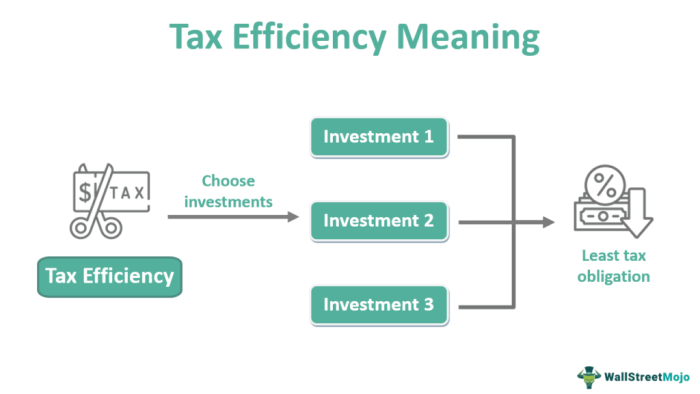
Investment horizon refers to the length of time an investor plans to hold an investment before selling it. When it comes to tax efficiency, the investment horizon plays a crucial role in determining the tax implications of an investment. Different investment horizons can have varying impacts on tax liabilities.
Short-Term Investment Horizon
A short-term investment horizon typically refers to holding an investment for one year or less. In this case, any gains realized from the investment are subject to short-term capital gains tax rates, which are typically higher than long-term capital gains tax rates. To minimize tax liabilities with a short-term investment horizon, investors may consider tax-loss harvesting strategies to offset gains with losses.
Long-Term Investment Horizon
On the other hand, a long-term investment horizon involves holding an investment for more than one year. Investments held for the long term are subject to long-term capital gains tax rates, which are generally lower than short-term capital gains tax rates. Investors with a long-term horizon can benefit from tax-deferred growth and potentially lower tax liabilities upon realizing gains.
Tax-Efficient Investment Strategies
- Utilizing tax-advantaged accounts such as IRAs and 401(k)s to defer taxes on investment gains.
- Investing in tax-efficient funds that aim to minimize capital gains distributions, reducing taxable income.
- Strategically rebalancing a portfolio to take advantage of tax-loss harvesting opportunities.
- Avoiding frequent trading to reduce short-term capital gains taxes.
Investment Advice
Investment advisors play a crucial role in guiding clients towards tax-efficient investments by providing personalized recommendations based on individual financial goals, risk tolerance, and investment horizons. They help clients navigate the complexities of the tax code and develop strategies to minimize tax liabilities while maximizing returns.
Role of Investment Advisors
- Assessing individual financial goals and risk tolerance to determine suitable investment options.
- Monitoring market trends and tax regulations to make informed investment decisions.
- Developing tax-efficient investment strategies tailored to specific investment horizons.
- Providing ongoing guidance and support to optimize investment portfolios for tax efficiency.
Seeking Tailored Investment Advice
- Choose a qualified and experienced investment advisor who understands your unique financial situation.
- Clearly communicate your investment goals, time horizon, and risk tolerance to ensure personalized recommendations.
- Ask about the advisor’s approach to tax-efficient investing and how they can help you minimize tax burdens.
- Regularly review and adjust your investment strategy with your advisor to align with changing tax laws and financial objectives.
Customizing Advice for Tax Situations
- Analyze individual tax brackets, deductions, and credits to identify opportunities for tax savings.
- Consider tax-efficient investment vehicles like index funds, ETFs, and municipal bonds to reduce taxable income.
- Implement strategies such as tax-loss harvesting and asset location to optimize after-tax returns.
- Work closely with your investment advisor to coordinate investment decisions with tax planning for maximum benefits.
Investment Advisor
In the world of financial planning, it is essential to differentiate between financial advisors and investment advisors. While financial advisors provide a broad range of financial services, including budgeting, retirement planning, and insurance, investment advisors specialize in managing investments and providing investment advice to clients.
Qualifications and Certifications
To become an investment advisor, individuals must meet certain qualifications and obtain specific certifications. One of the most common certifications is the Chartered Financial Analyst (CFA) designation, which requires passing three levels of exams covering topics like investment management, ethics, and economics. Additionally, many investment advisors are also Certified Financial Planners (CFPs), who have completed extensive training in financial planning and ethics.
Choosing a Qualified Investment Advisor
When it comes to tax-efficient investment planning, choosing a qualified investment advisor is crucial. A knowledgeable advisor can help you navigate the complex world of tax laws and regulations, ensuring that your investments are structured in a way that minimizes tax liabilities. By working with a qualified investment advisor, you can optimize your investment strategy to achieve your financial goals while maximizing tax efficiency.
Investment Banking
Investment banks play a crucial role in facilitating tax-efficient investment opportunities by providing specialized services to help clients optimize their investment horizons for tax benefits.
Services Offered by Investment Banks for Tax Efficiency
- Structuring tax-efficient investment vehicles: Investment banks help clients structure their investments in a way that minimizes tax liabilities, such as setting up tax-advantaged accounts or utilizing tax-efficient investment products.
- Tax planning and advisory services: Investment banks provide expert advice on tax planning strategies to help clients make informed decisions that align with their financial goals while maximizing tax benefits.
- Research and analysis: Investment banks conduct in-depth research and analysis on tax laws and regulations to identify opportunities for tax optimization and help clients navigate complex tax environments.
- Mergers and acquisitions (M&A) advisory: Investment banks assist clients in structuring M&A transactions in a tax-efficient manner, ensuring that the deal is structured to minimize tax implications and maximize value for all parties involved.
Investment Opportunities
Investors seeking tax advantages can explore various investment opportunities that align with their specific investment horizons for tax efficiency. By strategically selecting investments that offer tax benefits, individuals can optimize their overall portfolio returns while minimizing tax liabilities.
Real Estate Investments
Real estate investments, such as rental properties or real estate investment trusts (REITs), offer tax advantages through depreciation deductions, mortgage interest deductions, and potential capital gains tax deferral. These investments are well-suited for long-term horizons, allowing investors to benefit from appreciation and rental income while taking advantage of tax incentives.
Municipal Bonds
Municipal bonds are debt securities issued by state and local governments, typically offering tax-exempt interest income at the federal level and sometimes at the state level. These fixed-income investments are ideal for investors in higher tax brackets looking to generate tax-free income. Municipal bonds are suitable for both short-term and long-term investment horizons, depending on the specific bond maturity.
Retirement Accounts
Contributing to retirement accounts, such as 401(k) plans or individual retirement accounts (IRAs), can provide immediate tax benefits through tax-deferred growth or tax-free withdrawals in retirement. These accounts are designed for long-term savings and offer tax-efficient investment options like index funds or target-date funds. Investors can benefit from both tax advantages and compound interest over time.
Health Savings Accounts (HSAs)
HSAs offer triple tax advantages, allowing individuals to contribute pre-tax dollars, grow investments tax-free, and withdraw funds tax-free for qualified medical expenses. Investors with high-deductible health plans can leverage HSAs as long-term investment vehicles, building a tax-efficient healthcare fund for future expenses while enjoying tax savings along the way.
Investment Strategy
When it comes to tax-efficient investment strategies, there are several key components to consider in order to maximize returns while minimizing tax liabilities.
Short-Term vs. Long-Term Investment Strategies
Short-term investment strategies typically involve buying and selling assets within a year. While this can lead to potential higher returns, it also comes with higher tax implications due to short-term capital gains being taxed at a higher rate compared to long-term capital gains.
On the other hand, long-term investment strategies involve holding assets for more than a year. This can result in lower tax rates on capital gains, providing a more tax-efficient approach to investing.
Regularly Reviewing and Adjusting Strategies
It is crucial to regularly review and adjust investment strategies to maintain tax efficiency. This includes rebalancing portfolios, harvesting tax losses, and taking advantage of tax-advantaged accounts such as IRAs and 401(k)s.
By staying informed about changes in tax laws and adjusting investment strategies accordingly, investors can optimize their tax situation and maximize their overall returns.
As we conclude our exploration of Investment Horizon for Tax Efficiency, remember that strategic planning and informed decisions are the pillars of maximizing returns while minimizing tax liabilities.
Answers to Common Questions
What is the significance of investment horizon in tax efficiency?
The investment horizon determines the duration over which investments are held, impacting tax liabilities based on short-term or long-term gains.
How can one customize investment advice based on individual tax situations?
Investment advice can be tailored by considering factors like income level, risk tolerance, and specific tax circumstances to optimize tax-efficient investments.
What role do investment banks play in tax-efficient investment opportunities?
Investment banks facilitate strategic investment planning to maximize tax benefits for clients, offering specialized services focused on tax efficiency.


