Beginning with Adjusting Your Investment Horizon Based on Goals, the narrative unfolds in a compelling and distinctive manner, drawing readers into a story that promises to be both engaging and uniquely memorable.
Understanding how to adjust your investment horizon based on specific financial goals is crucial for achieving long-term success in your investment journey. By aligning these two aspects effectively, you can optimize your returns and minimize risks. Let’s delve into the key strategies and considerations for this essential financial planning process.
Investment Horizon Basics
Investment horizon refers to the length of time an investor plans to hold an investment before selling it. It is a crucial factor in determining the appropriate investment strategy to achieve financial goals.Short-term investment horizon typically ranges from a few months to a couple of years. Investors with short-term goals, such as saving for a vacation or a down payment on a house, may opt for less volatile investments like certificates of deposit (CDs) or money market accounts.Medium-term investment horizon usually spans from three to ten years.
Investors with medium-term goals, such as funding a child’s education or buying a car, might consider a balanced portfolio of stocks and bonds to achieve growth while managing risk.Long-term investment horizon extends beyond ten years. Investors with long-term goals, such as retirement planning or building wealth for future generations, can afford to take more risk and may focus on growth-oriented investments like stocks or real estate.
Setting Financial Goals
Setting specific financial goals is crucial for effective financial planning and investment. It provides a clear roadmap for your financial future and helps you stay focused on achieving your objectives.
Importance of Setting Specific Financial Goals
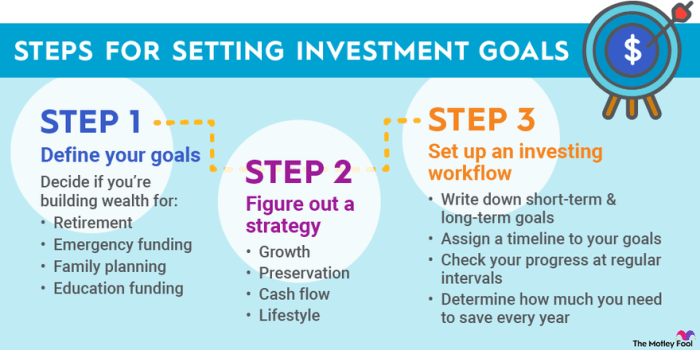
Having specific financial goals allows you to quantify what you want to achieve and set a timeline for accomplishing them. Whether it’s saving for retirement, buying a house, or funding your child’s education, clear goals provide motivation and direction for your investment decisions.
Different Investment Horizons for Different Goals
Each financial goal may require a different investment horizon based on the timeframe in which you aim to achieve it. Short-term goals like buying a car or taking a vacation may have a horizon of a few months to a couple of years, while long-term goals like retirement planning may span several decades.
Common Financial Goals
- Retirement Planning: Saving for retirement is a long-term goal that typically requires a multi-decade investment horizon to build a sufficient nest egg.
- Buying a House: Purchasing a home often involves saving for a down payment, which could be a medium-term goal with an investment horizon of a few years.
- Saving for Education: Funding your child’s education is a significant goal that may have a horizon of several years, depending on when they plan to attend college.
Aligning Investment Horizon with Goals

When it comes to investing, aligning your investment horizon with your financial goals is crucial for success. By matching the time frame of your investments with your objectives, you can optimize your returns and minimize risks.
Understanding the Importance of Alignment
Aligning your investment horizon with your goals helps ensure that you have the necessary funds available when you need them. For example, if you have a short-term goal like buying a house in the next five years, investing in high-risk assets with fluctuating returns may not be the best strategy.
On the other hand, if you have a long-term goal like retirement planning, you can afford to take more risks and invest in assets that offer higher returns over time.
The Risks of Mismatched Investment Horizon and Goals
Having a mismatch between your investment horizon and goals can lead to various risks. For instance, if you have a short-term goal but invest in long-term assets, you may not have enough funds available when you need them, resulting in financial stress or missed opportunities.
Conversely, if you have a long-term goal but invest in short-term assets, you may miss out on the potential growth that longer-term investments can offer, impacting the overall success of your financial plan.
Tips for Adjusting Your Investment Horizon
- Regularly review your financial goals and investment portfolio to ensure they are aligned.
- Consider adjusting your asset allocation based on changing goals or time frames.
- Consult with a financial advisor to help you make informed decisions about adjusting your investment horizon.
- Be prepared to rebalance your portfolio periodically to realign with your updated goals and risk tolerance.
Investment Strategies for Different Horizons
Investment strategies vary depending on the time horizon you are working with. Short-term goals may call for more conservative investments, while long-term goals may allow for a more aggressive approach. It’s important to align your investment strategy with your specific financial goals to maximize returns while managing risk effectively.
Short-Term Investment Strategies
Short-term investment strategies typically focus on preserving capital and providing liquidity. Investors with short-term goals, such as saving for a vacation or a down payment on a house, may opt for low-risk investment options like high-yield savings accounts, certificates of deposit (CDs), or short-term bonds. These investments offer lower returns but are less volatile, making them suitable for short-term needs.
Medium-Term Investment Strategies
Medium-term investment strategies strike a balance between risk and return. Investors with medium-term goals, such as saving for a child’s education or buying a car, may consider a mix of stocks, bonds, and mutual funds. These investments offer higher potential returns than short-term options but come with a higher level of risk. Diversification is key to managing risk in medium-term investments.
Long-Term Investment Strategies
Long-term investment strategies are geared towards growth and capital appreciation over an extended period. Investors with long-term goals, such as retirement planning or building wealth, may focus on equities, real estate, or retirement accounts like 401(k)s or IRAs. These investments have the potential for higher returns but also come with higher volatility. Dollar-cost averaging and a long-term buy-and-hold approach are common strategies for long-term investors.
Seeking Professional Advice
When it comes to managing your investments and aligning them with your financial goals, seeking advice from an investment advisor can offer numerous benefits. These professionals have the expertise and experience to guide you in making informed decisions that suit your unique situation.
Benefits of Seeking Advice from an Investment Advisor
- Expertise: Investment advisors have in-depth knowledge of the financial markets and investment options, allowing them to provide valuable insights and recommendations.
- Objective Perspective: An advisor can offer an unbiased view of your financial situation and goals, helping you make decisions based on facts rather than emotions.
- Customized Guidance: Advisors can tailor their advice to your specific needs and risk tolerance, ensuring that your investment strategy aligns with your goals.
- Monitoring and Adjustment: Professionals can monitor your investments regularly and make adjustments as needed to keep you on track towards your objectives.
How Investment Advisors Help in Aligning Investment Horizon with Financial Goals
Investment advisors play a crucial role in aligning your investment horizon with your financial goals by assessing your risk tolerance, time horizon, and objectives. They can help you identify the most suitable investment options and create a strategy that considers factors such as your age, income, and long-term goals.
Role of Investment Advisors in Creating Personalized Investment Strategies
- Assessment: Advisors evaluate your financial situation, goals, and risk tolerance to design a personalized investment plan that suits your needs.
- Diversification: Professionals can help you diversify your portfolio effectively to mitigate risk and maximize returns over the long term.
- Monitoring and Adjustments: Advisors continuously monitor your investments and make adjustments based on market conditions and changes in your financial goals.
- Educational Support: Investment advisors can also educate you on investment strategies, market trends, and financial planning, empowering you to make informed decisions.
Understanding Investment Opportunities
Investment opportunities refer to various ways investors can allocate their funds to potentially generate returns. These opportunities can vary based on different investment horizons, as short-term opportunities may focus on quick gains while long-term opportunities may involve more stable investments.
Identifying Lucrative Investment Opportunities
When identifying lucrative investment opportunities for each horizon, it is important to consider factors such as risk tolerance, financial goals, and time horizon. Short-term opportunities may include day trading, options trading, or high-yield savings accounts. On the other hand, long-term opportunities may involve investing in stocks, bonds, real estate, or retirement accounts.
- Short-Term Opportunities:
- Day trading in volatile markets
- Options trading for quick profits
- High-yield savings accounts with competitive interest rates
- Long-Term Opportunities:
- Investing in diversified stocks for growth
- Purchasing bonds for steady income
- Real estate investments for appreciation
- Contributing to retirement accounts for long-term wealth accumulation
Current Investment Opportunities in the Market
As of recent market trends, some current investment opportunities include:
- Technology Stocks:
- Companies in the tech sector continue to show strong growth potential.
- Green Energy Investments:
- With the increasing focus on sustainability, investments in green energy companies are gaining popularity.
- Cryptocurrency:
- The rise of digital currencies presents opportunities for investors looking for high-risk, high-reward assets.
In conclusion, adjusting your investment horizon based on goals is a fundamental aspect of successful investing. By carefully aligning your financial objectives with the appropriate timeframes, you can navigate market fluctuations with confidence and work towards building a robust portfolio tailored to your aspirations. Start implementing these strategies today to secure a prosperous financial future.
Helpful Answers
How can I determine my investment horizon?
To determine your investment horizon, consider your financial goals and timeframes. Short-term goals may require a horizon of a few months to a year, while long-term goals like retirement planning may span several decades.
What are the risks of not aligning my investment horizon with goals?
If your investment horizon doesn’t match your goals, you might end up taking on too much risk or missing out on growth opportunities. It’s essential to adjust your horizon to avoid these pitfalls.


